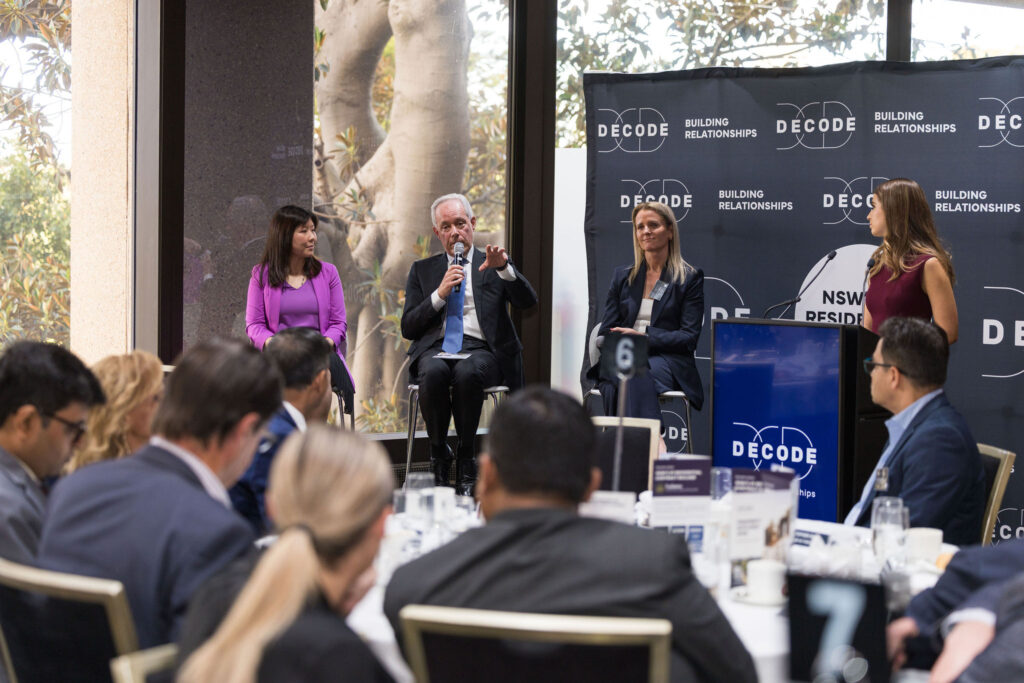
In May 2026, Decode Group brought together some of Australia’s leading property economists and a former Premier to take stock of where the NSW housing market stands and what the industry needs to do next. Here are the key insights from the room.
Consumer Confidence Is at Its Lowest Since 1973
The global economic impact of the conflict in the Middle East has hit consumer confidence harder than any event in living memory. According to ANZ data tracked since 1973, confidence is now at its lowest recorded level.
For the property market, the impact is direct. When people are uncertain about their financial future, they delay major decisions and buying a home is the biggest decision most people will make. This is showing up clearly in Sydney, where buyer activity has slowed and price growth has moderated compared to other capital cities.
For developers and funders, this is a market that requires patience. Demand has not disappeared, it has been deferred.
NSW Has Delivered Only 60% of Its National Housing Target
The federal government set a national target of 1.2 million new homes over five years beginning July 2024. In the first 18 months, Australia reached approximately 75% of its proportional share of that target. NSW reached only 60%.
That shortfall is significant not just in percentage terms but in raw numbers, NSW carries the largest share of the national target by population, meaning the gap between what is needed and what has been delivered is larger here than anywhere else in the country.
Approvals are one part of the problem. Getting projects through to completion is proving even harder.
The Construction Workforce Shortage Is Getting Worse
There is a shortage of skilled tradespeople across every construction occupation: electricians, carpenters, plumbers, painters, construction managers in every state, in both metropolitan and regional areas.
The challenge is not simply a pipeline problem. Workers are being trained, but suitability gaps, retention issues and long qualification timelines mean supply is not keeping pace with demand. Making it worse, Queensland is seeking an additional 55,000 construction workers ahead of the 2032 Olympics, creating direct interstate competition for an already limited labour pool.
Fast-tracking skilled migration assessments and introducing national occupational licensing reform are two of the most immediate levers available to address this.
What the 2026 Federal Budget Means for the Industry
The 2026 federal budget represents one of the most significant shifts in property tax policy in recent decades. Negative gearing will now apply only to new residential builds, and changes to the capital gains tax discount are designed to redirect investor activity toward new construction.
The $2 billion Local Infrastructure Fund directed at local councils, water utilities and power providers is the budget’s most practical measure for unlocking housing supply. It addresses one of the biggest barriers to development that the industry has been calling out for years: the cost and complexity of enabling infrastructure.
For investors, the message from the budget is clear. New builds are the opportunity. Established properties carry a different calculation going forward.
Decode Group’s Role in Solving the Supply Challenge
Decode Group is currently ranked the New South Wales’s #1 Residential Contract Builder in the 2026 Hubexo Construction League. With a $1.4 billion pipeline actively delivering over 2,500 homes across NSW, Decode is not waiting for conditions to improve.
The challenges discussed at the 2026 Property Outlook Boardroom Lunch are ones Decode navigates every day: workforce constraints, infrastructure gaps, rising costs and a market that demands more supply than the industry is currently able to deliver. Being part of this conversation is part of how Decode contributes to finding solutions that move the industry forward.